
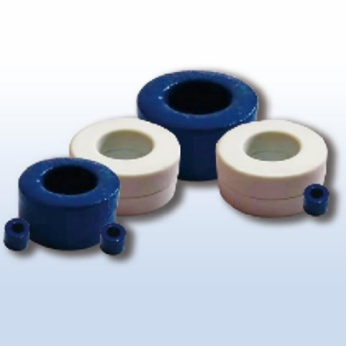
Transformers are essential components in modern electrical systems, responsible for transferring electrical energy efficiently from one circuit to another. While transformers are critical for energy distribution, they are not free from energy losses. These losses, primarily in the form of heat, result in wasted energy and reduced efficiency. One of the most promising solutions to minimize these losses is the adoption of low-loss nano-crystalline ring cores for current transformers. These advanced materials provide remarkable improvements in efficiency, reliability, and performance, offering a sustainable path toward energy conservation low-loss nano-crystalline ring core for current transformers.
Understanding Transformer Losses
Transformer losses can be broadly categorized into two types: core losses and copper losses. Core losses, also known as iron losses, occur in the magnetic core of the transformer due to the alternating magnetic field. They include hysteresis loss, caused by the repeated magnetization and demagnetization of the core, and eddy current loss, generated by circulating currents within the core material. Copper losses occur in the windings due to electrical resistance, but these are more easily managed through conductor design. The major challenge lies in reducing core losses without compromising the transformer’s performance.
Traditional transformer cores are often made from silicon steel laminations. While effective, these materials still exhibit significant core losses, particularly at high frequencies. This has led engineers and researchers to explore alternative materials, such as low-loss nano-crystalline ring cores, which offer superior magnetic properties and energy efficiency.
What Are Low-Loss Nano-Crystalline Ring Cores?
Low-loss nano-crystalline ring cores for current transformers are a type of advanced magnetic material engineered at the nanometer scale. They consist of ultra-fine crystalline grains embedded in an amorphous matrix. This structure provides exceptional magnetic permeability, low coercivity, and minimal hysteresis losses, making them ideal for high-performance transformers.
The unique properties of nano-crystalline materials allow them to respond efficiently to alternating magnetic fields, reducing the energy lost as heat. The ring core design further optimizes magnetic flux distribution, ensuring uniformity and minimizing localized energy dissipation. Together, the material composition and geometric design make low-loss nano-crystalline ring cores a highly effective solution for energy-efficient transformers.
Benefits of Low-Loss Nano-Crystalline Ring Cores
Significant Reduction in Energy Waste
One of the most critical advantages of low-loss nano-crystalline ring cores for current transformers is their ability to drastically reduce energy waste. By minimizing hysteresis and eddy current losses, these cores can improve transformer efficiency by up to 30% compared to traditional silicon steel cores. In large-scale power distribution systems, this improvement translates into substantial energy savings and lower operational costs.
Enhanced High-Frequency Performance
Transformers operating at high frequencies often face increased core losses due to rapid magnetic reversals. Low-loss nano-crystalline ring cores exhibit excellent high-frequency characteristics, maintaining low losses even under demanding operating conditions. This makes them particularly suitable for modern applications, such as renewable energy systems, electric vehicles, and high-speed industrial machinery, where high-frequency transformers are increasingly common.
Improved Thermal Management
Reduced core losses directly result in lower heat generation within the transformer. This has a twofold benefit: it decreases the risk of overheating, extending the lifespan of the transformer, and reduces the need for extensive cooling systems. As a result, transformers using low-loss nano-crystalline ring cores can be designed more compactly, saving space and further reducing operational costs.
Compact and Lightweight Design
The superior magnetic properties of nano-crystalline materials allow transformer cores to carry higher magnetic flux density without saturating. This enables engineers to design smaller and lighter transformers without sacrificing performance. Low-loss nano-crystalline ring cores are thus ideal for applications where space and weight are critical, such as in aerospace, electric vehicles, and portable power systems.
Enhanced Reliability and Durability
Transformers with low-loss nano-crystalline ring cores experience less thermal stress due to reduced heat generation. This decreases the likelihood of insulation degradation and other heat-related failures, enhancing overall reliability. Additionally, the nanostructured core material resists mechanical stress and magnetic fatigue, ensuring long-term stability even under fluctuating load conditions.
Applications of Low-Loss Nano-Crystalline Ring Cores
The adoption of low-loss nano-crystalline ring cores for current transformers spans multiple industries. In the power generation sector, these cores are used in transformers for renewable energy sources, such as wind and solar, where efficiency is paramount. In industrial automation, they are integrated into precision transformers that power sensitive electronic equipment. The transportation industry also benefits, with electric trains and vehicles requiring lightweight, high-efficiency transformers to optimize energy use.
Another critical application is in smart grids, where energy efficiency and precise current measurement are crucial. Low-loss nano-crystalline ring cores provide accurate performance, enabling better monitoring and management of electrical networks, reducing overall energy waste, and supporting sustainable energy practices.
Challenges and Considerations
Despite their advantages, low-loss nano-crystalline ring cores for current transformers come with certain challenges. The manufacturing process is more complex and costly than traditional silicon steel cores, which can impact initial investment. Additionally, these cores require careful handling during installation to prevent damage to the delicate nanocrystalline structure. However, the long-term energy savings, reduced maintenance, and enhanced performance often justify the higher upfront costs, particularly in large-scale or high-efficiency applications.
Future Trends and Innovations
Research into nano-crystalline materials continues to advance, promising even greater efficiency improvements for transformers. Innovations such as hybrid cores combining nano-crystalline and amorphous materials, optimized ring geometries, and improved thermal management techniques are paving the way for next-generation transformers. As energy efficiency standards become stricter and the demand for renewable energy grows, the adoption of low-loss nano-crystalline ring cores is expected to accelerate globally.
Conclusion
Low-loss nano-crystalline ring cores for current transformers represent a significant leap forward in transformer technology. By drastically reducing core losses, improving high-frequency performance, and enabling compact and reliable designs, these advanced materials help minimize energy waste and enhance overall system efficiency. While they may require a higher initial investment, the long-term benefits in energy savings, durability, and operational performance make them a highly attractive solution for modern electrical applications. As the energy landscape evolves toward sustainability and efficiency, low-loss nano-crystalline ring cores are poised to play a pivotal role in reducing energy waste and supporting a greener, more efficient future.