
The legal landscape around AI-generated music is evolving faster than most creators can track. New court decisions, updated platform policies, and shifting regulatory positions create a state of genuine ambiguity — but the ambiguity is not evenly distributed. Some questions are genuinely unsettled. Others are simpler than the discourse suggests.
Here’s what the current landscape actually means for creators using AI music tools.
What Determines Ownership When Using an AI Song Generator?
When you generate music using an AI tool, who owns what’s produced?
The answer depends entirely on the platform’s terms of service — not on copyright law, which doesn’t yet have definitive answers for AI-generated content in most jurisdictions. Reputable AI music platforms address this explicitly in their terms.
The practical standard: most platforms offering commercial-tier access grant the user full ownership or an extensive commercial license to everything they generate. Read the terms carefully. “Royalty-free” can mean different things depending on the platform — it may mean you don’t pay ongoing royalties, or it may mean the platform retains an underlying license.
The platform’s terms of service are the document that determines what you can do with generated music. Copyright law provides the theoretical framework; the TOS provides the operational one.
Does AI-Generated Music Trigger Content ID and Platform Claims?
AI-generated music doesn’t inherently trigger content ID claims. Content ID identifies specific sound recordings — it compares audio fingerprints against a database of registered tracks. Music you generate from an AI tool hasn’t been registered against any existing fingerprint.
The caveat: if the AI tool generated output that reproduces a section of a protected work in a recognizable way, that reproduction could be identified. High-quality generation tools avoid this through their generation architecture. Know the tool you’re using.
What Is the Training Data Question for AI Music Licensing?
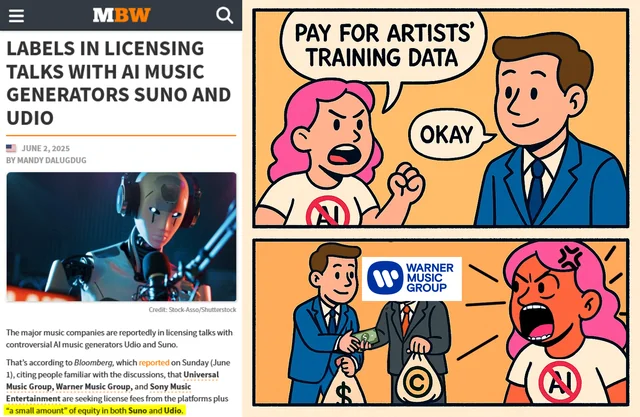
The legal argument around AI music centers on training data — whether models trained on copyrighted music without license constitute infringement at the generation stage. This question is being litigated in multiple jurisdictions simultaneously.
What this means for you as a user: the legal exposure sits with the platform, not the user. Users generating music through licensed tools aren’t party to the training data disputes. The risk calculus for individual creators is different from the risk calculus for platforms.
That said, choosing platforms with transparent, ethically sound training data practices reduces the risk that any adverse outcome from training data disputes would affect the platform’s operation.
What Makes AI Music Safe for Commercial Use?
An ai song generator with clear commercial licensing terms covers the use cases that matter most: YouTube monetization, Spotify distribution, sync licensing, advertising, and public performance.
Three criteria separate commercially safe AI music from legally ambiguous AI music:
Explicit commercial license. The platform’s terms explicitly permit commercial use, including monetization on video platforms and distribution on streaming services.
No upstream rights claims. The terms clarify that neither the platform nor any third party retains rights that would affect the user’s ability to exploit the generated content.
Transparency about training. The platform discloses how its models were trained, providing a reasonable basis for assessing infringement risk.
Can AI-Generated Music Be Registered for Copyright Protection?
The question of whether AI-generated music can be registered for copyright protection remains unsettled in most jurisdictions. The US Copyright Office’s current position requires meaningful human authorship as a condition of registration.
For works where the creator contributed significant human authorship through MIDI composition, melodic writing, and arrangement — using AI generation as a production tool — the human authorship argument is stronger. Document your creative process.
Frequently Asked Questions
Who owns the rights to a song created by AI?
When you generate music using an AI tool, who owns what’s produced? The answer depends entirely on the platform’s terms of service — not on copyright law, which doesn’t yet have definitive answers for AI-generated content in most jurisdictions.
Can you legally sell AI-generated music?
When you generate music using an AI tool, who owns what’s produced? The answer depends entirely on the platform’s terms of service — not on copyright law, which doesn’t yet have definitive answers for AI-generated content in most jurisdictions.
Do I own the music I make with AI?
When you generate music using an AI tool, who owns what’s produced? The answer depends entirely on the platform’s terms of service — not on copyright law, which doesn’t yet have definitive answers for AI-generated content in most jurisdictions.
Can people tell if a song is AI-generated?
When you generate music using an AI tool, who owns what’s produced? The answer depends entirely on the platform’s terms of service — not on copyright law, which doesn’t yet have definitive answers for AI-generated content in most jurisdictions.
What Is the Practical Guidance?
Choose ai music generator platforms that provide explicit commercial licensing terms, disclose their training data practices, and have clear terms about ownership. The ambiguity in AI music copyright law is real — but it doesn’t affect creators who are using well-designed platforms in the ways the platforms permit. The exposure is concentrated in edge cases that careful platform selection largely avoids.