
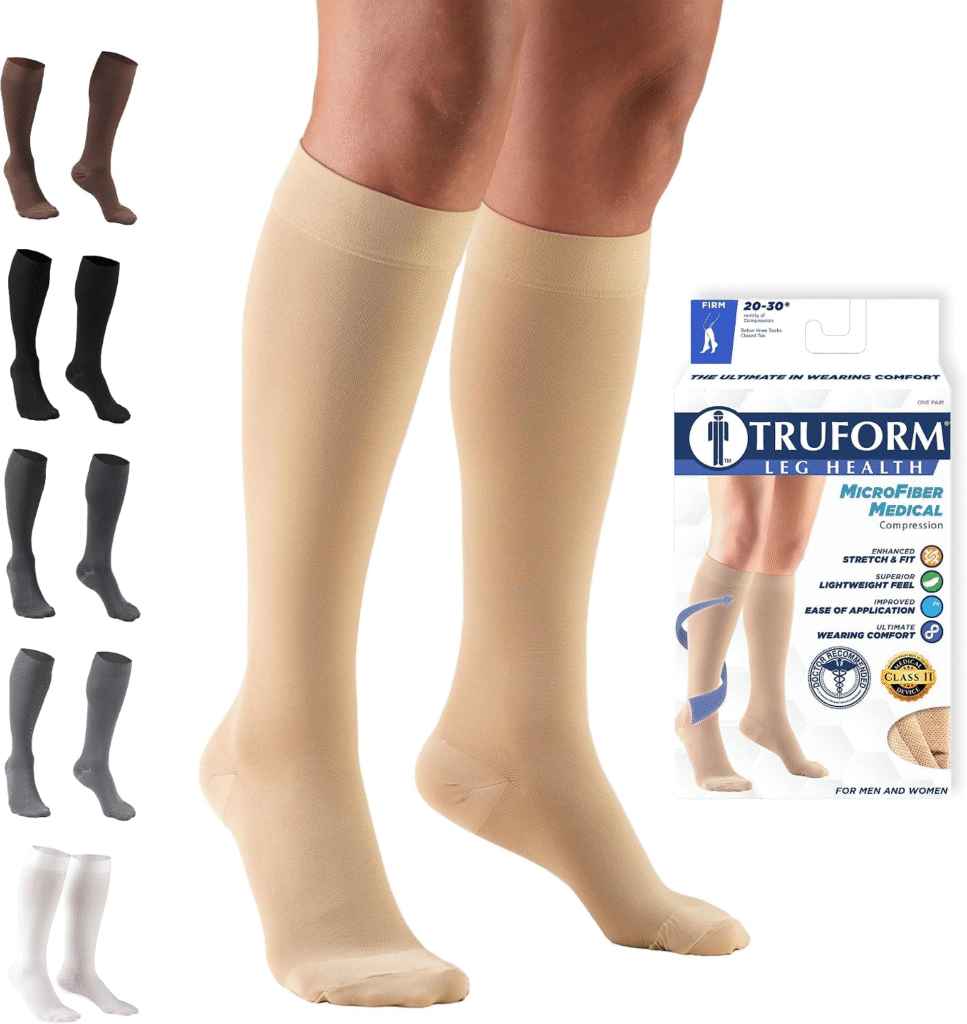
Varicose veins can be frustrating, especially when they are accompanied by aching, swelling, heaviness, or tiredness in the legs. These symptoms may become more noticeable after standing for several hours, sitting at a desk, or traveling for long periods. One option many people consider for managing these symptoms is compression stockings for varicose veins.
Unlike ordinary socks, compression stockings are designed to provide controlled pressure around the legs. When properly fitted, they can support circulation and may help reduce some of the discomfort associated with varicose veins.
Understanding Varicose Veins
Varicose veins are enlarged and twisted veins that commonly appear on the legs. They develop when blood does not move efficiently back toward the heart.
Leg veins contain valves that help direct blood upward. When these valves become weak or stop working properly, blood can collect within the veins. Over time, this can cause the veins to become enlarged and more visible.
Some people have varicose veins without experiencing noticeable symptoms. Others may experience:
- Aching or throbbing
- Swelling around the ankles
- Heavy or tired legs
- Itching
- Cramping
- Discomfort after prolonged standing
Compression therapy can be one way of helping manage some of these symptoms.
How Compression Stockings Support the Legs
Compression stockings apply pressure to the tissues and veins of the lower legs. Graduated compression is typically strongest around the ankle and gradually decreases as the stocking moves upward.
This pressure can help support the veins and encourage blood to move toward the heart. It may also help reduce the tendency for fluid to accumulate in the lower legs.
The goal isn’t to squeeze the legs as tightly as possible. Instead, the stocking should provide an appropriate, consistent level of pressure.
Benefits of Compression Stockings for Varicose Veins
People use compression stockings for several reasons.
Helps Manage Leg Swelling
Swelling can occur when fluid accumulates in the lower legs. Properly fitted compression stockings may help reduce or manage this type of swelling.
Supports Comfortable Movement
Aching and heaviness can make walking or standing uncomfortable. Some people find that compression garments provide additional support during their daily routines.
Useful During Long Periods of Standing
Teachers, retail workers, healthcare workers, and others who spend much of their workday standing may experience tired legs. Compression stockings can be incorporated into their workday when appropriate.
Helpful During Long Periods of Sitting
Sitting for extended periods can also leave the legs feeling stiff or heavy. Wearing appropriate compression garments may provide additional support during long periods of inactivity.
Different Styles to Consider
Compression stockings aren’t all the same. The right style depends on where symptoms occur and what level of coverage is needed.
Knee-High Compression Stockings
These extend from the foot to just below the knee. They are convenient and commonly used when symptoms primarily involve the lower leg.
Thigh-High Compression Stockings
These extend above the knee and may be suitable when support is needed higher on the leg.
Full-Length Compression Garments
These cover most or all of the leg and may be recommended in specific situations.
Choosing a length based on comfort alone isn’t always the best approach. If you have significant vein symptoms, professional guidance can help determine which style is appropriate.
Understanding mmHg
You may notice numbers such as 15–20 or 20–30 mmHg when shopping for compression stockings.
The term mmHg means millimeters of mercury and is used to describe the amount of pressure provided by the stocking.
Different pressure ranges are designed for different needs. A lighter level may be appropriate for general support, while stronger compression may be used for particular medical conditions.
It’s important not to assume that the strongest option will provide the greatest benefit. The appropriate compression level depends on the individual and the reason compression is being used.
Finding the Correct Size
Correct sizing is one of the most important parts of using compression stockings.
A stocking that is too loose may not provide adequate compression. A stocking that is too tight may cause discomfort and be difficult to wear.
Most manufacturers provide a sizing chart that uses leg measurements. Depending on the product, these measurements may include ankle circumference, calf circumference, thigh circumference, and leg length.
Take measurements carefully and compare them with the manufacturer’s chart before ordering.
How to Put Compression Stockings On
Compression stockings can be more difficult to put on than ordinary socks because of their tight construction.
Putting them on early in the day can make the process easier. Start by placing the foot correctly into the stocking and then gradually work the fabric upward.
Don’t pull the stocking aggressively from the top. Instead, distribute the material evenly over the leg.
Once it is in place, check for wrinkles or folds. The stocking should lie smoothly against the skin.
How Long Should You Wear Them?
The appropriate wearing schedule depends on why you are using compression and the specific product.
Many compression stockings are designed for daytime use. Some people wear them during work, travel, exercise, or other activities where they spend a long time on their feet.
Follow the instructions supplied with the product and any recommendations from your healthcare professional.
Are They Comfortable?
The first time you wear compression stockings, they may feel tighter than ordinary socks. However, properly fitted stockings should not cause severe pain.
If you experience numbness, significant discomfort, unusual skin discoloration, or other concerning symptoms while wearing them, remove the stockings and seek professional advice.
Comfort is important because compression stockings are most useful when they can be worn correctly and consistently.
When Should You Replace Compression Stockings?
Compression stockings gradually lose elasticity with use. Frequent washing and wearing can eventually affect their ability to provide consistent pressure.
Check your stockings regularly. If the material becomes stretched, damaged, thin, or loose, it may be time to replace them.
Following the manufacturer’s care instructions can help extend their useful life.
Compression Stockings Are Not a Cure
One important point to remember is that compression stockings generally manage symptoms rather than eliminate existing varicose veins.
They can be useful for improving comfort and managing swelling, but they don’t physically remove enlarged veins.
If varicose veins become painful, develop skin changes, bleed, or cause persistent swelling, professional evaluation is recommended. Depending on the situation, a healthcare professional may discuss other treatment options.
When to Talk to a Healthcare Professional
Before using compression stockings, consider getting professional advice if you have an existing circulation problem or aren’t sure which compression level is appropriate.
You should also seek medical attention for sudden or severe leg swelling, significant pain, warmth, redness, skin ulcers, or bleeding from a varicose vein.
These symptoms shouldn’t simply be treated with compression stockings without understanding the underlying cause.
Final Thoughts
Choosing compression stockings for varicose veins can be a practical step for people looking to manage leg swelling, heaviness, aching, and tiredness. Their graduated pressure provides targeted support and may make everyday activities more comfortable.
The most important considerations are proper sizing, appropriate compression, and correct use. While compression stockings don’t cure varicose veins, they can be a useful part of a broader approach to managing symptoms and maintaining comfortable, active legs.